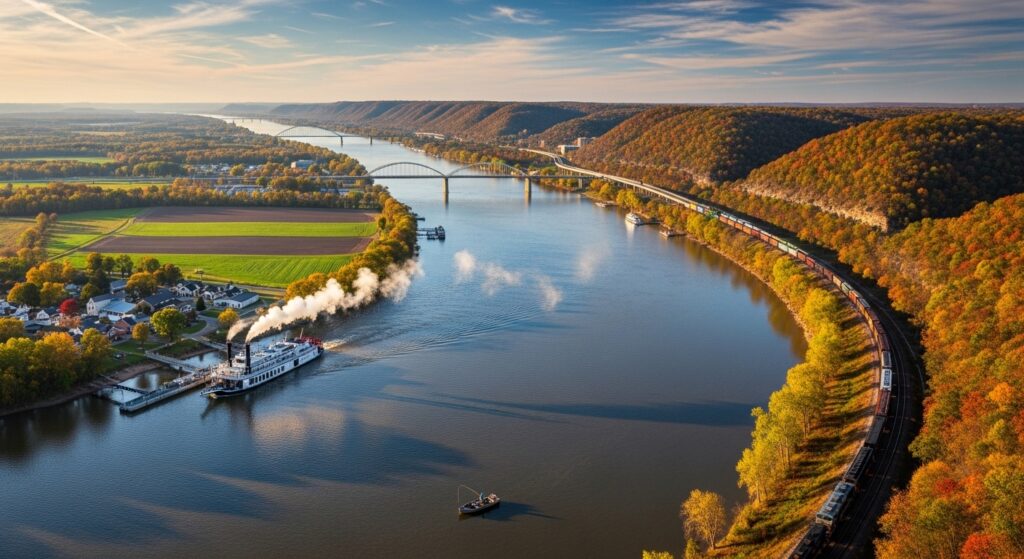
The Mississippi River, often called the “Mighty Mississippi,” is one of the most famous rivers in the world. The word “reka” simply means river in several Slavic languages, so the phrase “reka Mississippi” refers to the Mississippi River itself. Stretching across the central United States, this river has played a crucial role in shaping geography, history, culture, and economic development for centuries.
Flowing through the heart of North America, the Mississippi River is not only a powerful natural feature but also a symbol of exploration, trade, and environmental diversity. From its humble beginnings in northern forests to its wide delta on the Gulf Coast, the river’s journey tells a remarkable story of nature and civilization intertwined.
Geographic Overview of the Mississippi River
The Mississippi River begins at Lake Itasca in the U.S. state of Minnesota. From this small lake, the river flows south for approximately 2,340 miles (3,766 kilometers) before emptying into the Gulf of Mexico near Louisiana.
Throughout its journey, the river collects water from numerous tributaries, including the Missouri River and the Ohio River. Together, these rivers form one of the largest drainage systems in the world. The entire basin drains parts of 31 U.S. states and two Canadian provinces, covering an area of about 1.2 million square miles.
This enormous watershed makes the Mississippi River system one of the most important freshwater networks in North America.
Sections of the Mississippi River
Geographers usually divide the Mississippi River into four main sections, each with its own characteristics.
Headwaters
The headwaters stretch from Lake Itasca to St. Paul, Minnesota. In this region, the river is relatively narrow and flows through forests, marshes, and small lakes. The water is clear and calm compared with other sections.
Upper Mississippi
The upper section runs from St. Paul to St. Louis, Missouri. In this area, the river becomes wider and deeper as it collects water from tributaries in states like Wisconsin, Iowa, and Illinois.
Middle Mississippi
The middle portion begins where the Mississippi meets the Missouri River near St. Louis and continues until it reaches the Ohio River. Here, the river becomes more powerful and carries large amounts of sediment.
Lower Mississippi
The final section runs from the Ohio River confluence to the Gulf of Mexico. This stretch is wide, slow-moving, and characterized by large bends known as meanders. Eventually, the river spreads into a vast delta before entering the Gulf.
Historical Importance of the Mississippi River
The Mississippi River has played a central role in the history of North America. Long before European explorers arrived, Native American civilizations lived along its banks, relying on the river for fishing, agriculture, and transportation.
The first European to document the river was Spanish explorer Hernando de Soto, who reached it in 1541. Later, French explorers such as Jacques Marquette and Louis Jolliet traveled along parts of the river in 1673, helping map the region and expand European knowledge of the continent.
In 1682, French explorer René-Robert Cavelier, Sieur de La Salle claimed the Mississippi River valley for France, naming it Louisiana. Over time, control of the region shifted between France, Spain, and the United States.
One of the most significant events in American history connected to the river was the Louisiana Purchase, when the United States bought a vast territory from France. This purchase gave the young nation control of the Mississippi River and opened the door for westward expansion.
Economic Role of the River
The Mississippi River has long been one of the most important commercial waterways in the world. Its wide channel and long reach make it ideal for transporting goods between the interior of the United States and global markets.
Major cargo transported along the river includes:
- Grain and agricultural products
- Coal and petroleum
- Steel and construction materials
- Chemicals and fertilizers
Large barges move these goods along the river system, connecting inland farms and factories to international shipping routes. As a result, the Mississippi River remains a vital part of the American economy.
Cultural Influence of the Mississippi River
Beyond its economic importance, the Mississippi River has inspired countless works of literature, music, and art. The river appears frequently in American folklore and storytelling.
One of the most famous authors associated with the Mississippi River is Mark Twain, who grew up near the river in Missouri. His novels The Adventures of Tom Sawyer and Adventures of Huckleberry Finn portray life along the Mississippi during the 19th century.
Twain’s vivid descriptions helped cement the river’s image as a symbol of adventure, freedom, and the spirit of the American frontier.
Ecology and Wildlife
The Mississippi River basin supports a rich and diverse ecosystem. Its wetlands, forests, and floodplains provide habitats for thousands of species of plants and animals.
Common wildlife found in the river system includes:
- Catfish and other freshwater fish
- Migratory birds such as ducks and pelicans
- Turtles and amphibians
- Mammals including otters and beavers
The river also serves as a major migration corridor for birds traveling between North and South America.
Flooding and Environmental Challenges
Despite its benefits, the Mississippi River also presents significant environmental challenges. Seasonal floods have historically caused widespread damage to communities along the river.
One of the most devastating events was the Great Mississippi Flood of 1927, which flooded thousands of square miles and displaced hundreds of thousands of people.
In response to such disasters, engineers built extensive systems of levees, dams, and spillways to control the river’s flow. While these structures help prevent flooding, they have also altered natural ecosystems and reduced the amount of sediment reaching the Mississippi Delta.
Today, environmental scientists are working to balance flood protection with ecological restoration.
The Mississippi Delta
Near the end of its journey, the Mississippi River forms the Mississippi River Delta, a vast area of wetlands and marshes. Over millions of years, the river has deposited sediment here, creating fertile land and unique habitats.
The delta region is essential for:
- Coastal protection
- Fisheries and seafood industries
- Wildlife habitats
- Oil and gas infrastructure
However, erosion and rising sea levels have caused parts of the delta to shrink, making conservation efforts increasingly important.
Tourism and Recreation
The Mississippi River is also a major destination for tourism and recreation. Visitors can enjoy activities such as:
- Riverboat cruises
- Fishing and boating
- Hiking along scenic river trails
- Exploring historic river towns
Cities like New Orleans, Memphis, Tennessee, and Minneapolis attract tourists interested in music, culture, and river history.
Riverfront parks and museums help preserve the heritage of this legendary waterway.
The Mississippi River in the Modern Era
Today, the Mississippi River remains one of the most studied and managed rivers in the world. Government agencies, environmental groups, and scientists monitor water levels, wildlife populations, and pollution levels to ensure the river’s health.
Efforts are also underway to restore wetlands, improve water quality, and protect communities from flooding. These initiatives aim to preserve the river for future generations while maintaining its role as an economic and cultural lifeline.
Conclusion
The Mississippi River, often referred to as reka Mississippi in some languages, is far more than just a river. It is a powerful natural system that has shaped the geography, history, and culture of the United States.
From its source in Lake Itasca to its vast delta in the Gulf of Mexico, the Mississippi River connects landscapes, communities, and ecosystems across thousands of miles. Its importance in transportation, agriculture, literature, and environmental diversity makes it one of the most remarkable rivers in the world.