
Logistics and fulfillment now directly impact brand reputation and growth. A damaged shipment costs more than the product value, but trust, reviews, and repeat purchases.
Rising e-commerce demand has exposed weaknesses in outdated packing systems. Manual processes that worked for 50 orders a day break down at 200. Businesses can’t hire their way out of efficiency problems.
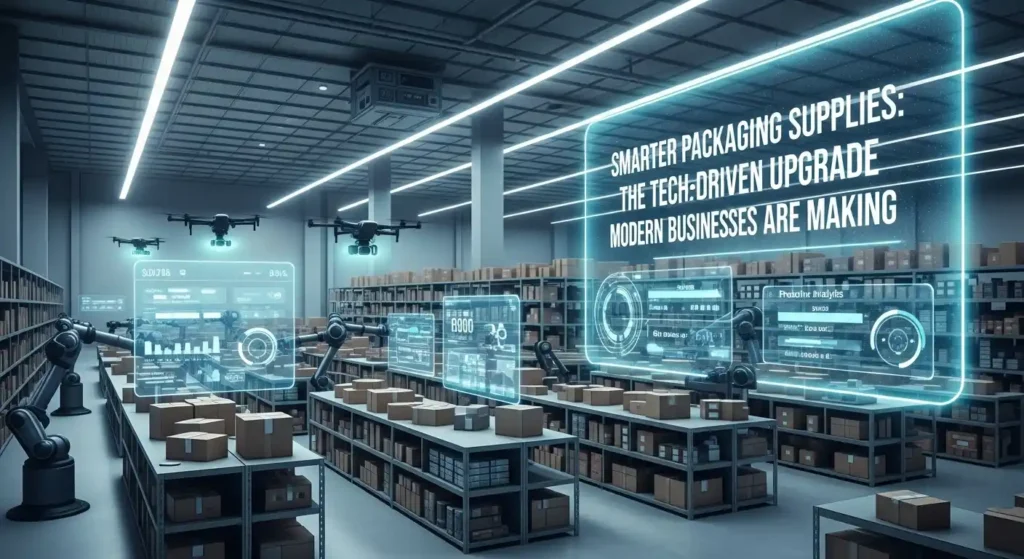
Smarter packaging supplies represent a technology-driven upgrade that helps resolve these problems. This shift changes how businesses pack, ship, and scale operations.
The Problem with Traditional Packaging Methods
Manual wrapping, strapping, and void filling slow down operations. Watch someone hand-wrap a pallet or stuff boxes with bubble wrap for an hour. That’s time not spent on tasks that grow the business.
Plus, different staff members pack differently. Inconsistent packing leads to damaged goods and returns. One person uses too little protection. Another uses too much. Neither approach works well.
Labour-intensive processes also increase overhead costs. Every minute spent on repetitive packing tasks adds up across hundreds or thousands of orders. Those costs compound monthly.
Storage challenges caused by bulky packaging materials create another problem. Rolls of bubble wrap, boxes of packing peanuts, and stacks of cardboard take up valuable warehouse space. Space costs money.
These issues pushed businesses to modernise. Many brands follow this trend, with companies like MPSPack leading innovations in packaging supplies in Melbourne. The shift from manual to smart automation systems solves real operational problems.
What Makes Packaging Supplies “Smart”?
Smart packaging supplies integrate technology into everyday packing operations. They’re not just better materials, but systems that work differently.
- On-demand systems produce protective fill as needed. Air cushion machines create exactly the amount of cushioning each order requires. No excess. No waste. No storage of bulky pre-made materials.
- Semi-automated or automated pallet wrapping solutions handle the repetitive work. Load a pallet, press start, and the machine wraps it consistently every time. The staff moves on to the next task.
- Precision strapping and sealing tools deliver consistent application. The tension and the seal strength stay the same. More importantly, the result stays the same across every package.
- Material-efficient void fill systems reduce waste while protecting products. They calculate the space that needs filling and dispense the right amount. Nothing more, nothing less.
The key advantage is integration into the workflow. Smart packaging supplies fit into existing processes while speeding them up and making them more consistent. They scale as order volume grows.
Lumber Quantity Estimation with Practical Examples for Contractors
The Technology Behind the Upgrade
Automation reduces repetitive manual labour. Machines handle the physical work that causes fatigue and repetitive strain injuries. The work team focuses on quality control and problem-solving instead of wrapping and taping.
Adjustable settings accommodate different product sizes and weights. The same machine handles various packaging needs. No need for separate equipment for every situation.
Machines are also designed for durability and long-term efficiency. Industrial-grade components handle thousands of cycles, so maintenance requirements stay minimal. Downtime stays rare.
Furthermore, compact systems maximise warehouse space. Modern packaging equipment has a smaller footprint than the materials it replaces. One air cushion machine takes up less room than shelves full of bubble wrap and foam.
Packaging suppliers now provide equipment plus consumables as integrated solutions. They don’t just sell you a machine and walk away. They supply the film, strapping, void fill, and all other materials designed to work with that equipment. The system works together.
Efficiency Gains: Where Businesses See Immediate Results
Faster packing speeds and higher daily output show up first. Orders that took five minutes to pack now take two minutes. That difference compounds across the entire operation.
Reduced material waste through precision application cuts costs. Smart systems use exactly what each package needs.
Lower return rates due to improved protection save money in multiple ways. Fewer damaged products mean fewer refunds, fewer replacement shipments, and fewer angry customers. Each prevented return preserves profit margin.
Better workflow organisation and fewer bottlenecks improve overall operations. When packing stations run smoothly, the entire fulfilment process flows better. Staff spend less time waiting or fixing problems.
The ability to scale without proportionally increasing staff changes growth economics. Adding 50% more orders doesn’t require adding 50% more packers. Smart systems handle increased volume with the same team size.
Sustainability as a Built-In Advantage
Recyclable or lower-waste protective solutions meet consumer expectations. Customers notice packaging waste and prefer businesses that use materials they can easily recycle or compost.
In addition, on-demand production reduces excess inventory. Traditional packaging requires storing large quantities of pre-made materials. Smart systems produce protection materials as needed, eliminating storage waste.
These sustainability benefits happen automatically with smart packaging systems. Businesses don’t sacrifice protection or efficiency to reduce waste. The technology delivers both outcomes simultaneously.
Choosing the Right Smart Packaging Supplies
To choose the right options, businesses should assess order volume and product fragility first. High volume justifies more automation. Fragile products need more sophisticated protection systems. Equipment investment should match actual business needs.
Then, identify bottlenecks in the current process. Where do orders pile up? Where do errors happen most? Where does packing take the longest? Target those problem areas with smart solutions.
Consider storage capacity and floor space. Measure your available area before choosing equipment. Compact systems work better in tight spaces. Larger operations can accommodate bigger automated solutions.
Think long-term scalability rather than short-term cost savings. The cheapest option often becomes expensive when you outgrow it quickly. Invest in systems that handle your current volume plus expected growth.
Packaging partners help match businesses with appropriate solutions. Companies that specialise in packaging supplies act as advisors, not just vendors. They understand different operational challenges and recommend systems that actually fit your workflow.
Working with experienced suppliers saves trial-and-error costs. They’ve seen what works and what doesn’t across different business types. They help you avoid expensive mistakes.
A Small Upgrade with Big Operational Impact
Smarter packaging supplies represent a strategic investment in operational efficiency. The initial cost pays back through faster fulfilment, reduced waste, lower labour costs, and fewer returns.
This upgrade blends technology, efficiency, and sustainability into daily operations. Businesses don’t need to choose between speed and environmental responsibility. Modern packaging systems deliver both.
Automation continues to reshape fulfilment and logistics, and the businesses that adopt smart packaging systems now position themselves better for future growth. They build operational capacity that scales efficiently.
The technology exists. The benefits are proven. Smart packaging supplies help businesses meet customer demands without proportionally increasing costs or complexity. That’s an operational advantage worth having.